








Frequently Asked Questions
Ans: The URSA Series is a premier industrial laser system designed specifically for processing mid-sized parts. It is engineered for highly cost-effective and precise performance in small- to middle-sized production series, making it exceptionally suited for general part marking, heavy deep engraving, micro-drilling, and fine cutting.
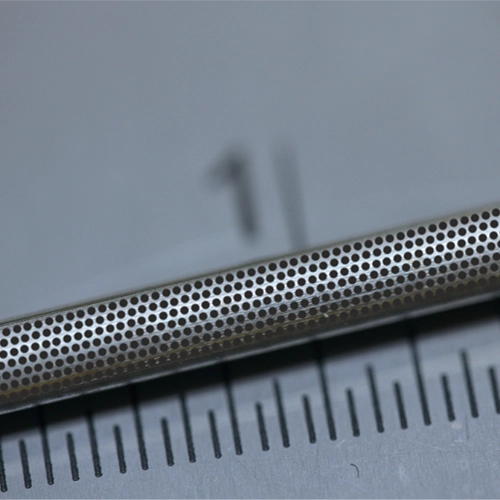
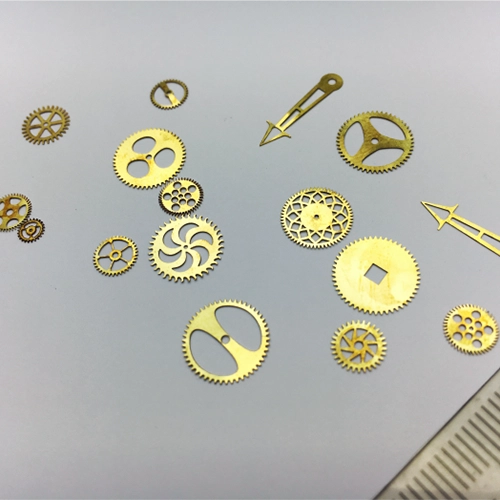
Ans: The URSA is heavily utilized across: The Watchmaking Industry for micro-drilling, surface texturing, and fine cutting of watch components. The Die-Mould & Tool Industry for high-precision depth engraving and texturing on heavy industrial hard-steel star dies and molds. The Automotive Sector for high-contrast interior backlit laser paint removal, permanent DPM data-matrix codes, and logo serialization. The Medical Device Field for permanent, chemical-resistant UDI marking on delicate surgical equipment and implants.
Ans: URSA handles processes such as surface marking, micro-engraving, heavy deep engraving, fine texturing, micro-drilling, clean ablation, and precision surface cleaning on metals, alloys, engineered plastics, and graphic composites.
Ans: Yes, the URSA offers full flexibility. Depending on your material processing demands, it can be configured with a variety of advanced European laser sources, including IR (Infrared/Fiber), UV (Ultraviolet), Green, CO2, or even ultra-precise Femtosecond laser technologies. It can even be equipped with a second laser source if multi-wavelength processes are needed.
Ans: URSA is built for mid-sized parts up to 300 × 500 × 200 mm and under 40 kg. A wide housing opening and large Z-axis let you load bulky or irregular components easily.
Ans: The machine measures 882 × 1100 × 1890 mm. Its compact footprint fits most shop floors despite the large work area.
Ans: Yes. URSA supports 2D-on-2D, 3D-on-2D, 2D-on-3D and 3D-on-3D marking. With Markomark software, it can import STL or CLI files and engrave in slices by moving the focus in the Z-direction, which suits dies, moulds and coin dies.
Ans: URSA marks metals and alloys (steel, stainless steel, aluminium, copper, brass, titanium), engineering plastics (ABS, PP, PE, PET, PVC, nylon), and composites. The right laser source (fiber, UV, green, CO₂ or femtosecond) depends on the material.
Ans: A granite base and portal absorb vibration and keep the machine stable long-term. A high-resolution Z-axis, low parallelism tolerances and a coaxial vision system add to this. A focus finder helps set the part origin accurately.
Ans: Yes. Its modular design allows inline integration. Parts can be transferred width-wise through the side opening windows. It also supports standalone control over Ethernet or RS232 for PLC and line communication.
Ans: Yes. URSA is designed and manufactured by Markolaser in Gurugram, Haryana, part of the Spinks World group. It is supported in India and through global distributors.
Ans: The price depends on the laser source, power, software version and accessories you choose. Request a quote or send your samples for a trial marking. The price may start from 1.8 million INR and go up to 3 million depending on many factors.
Ans: Yes. Markolaser offers sample testing through its sampling form, so you can check marking quality on your own parts first. Send the inquiry here.
Ans: Yes. URSA is widely used for laser annealing on stainless steel, titanium and other metals. The laser heats the surface just below its melting point, which forms a thin oxide layer that appears as a permanent black or coloured mark. Because no material is removed, the surface stays smooth and keeps its corrosion resistance. That makes annealing ideal for medical instruments, implants, food-processing equipment and other parts that are cleaned or sterilised often. URSA can also anneal curved and 3D surfaces, and it can produce colour annealing for decorative marks. Talk to us about the laser annealing projects we have done so far.
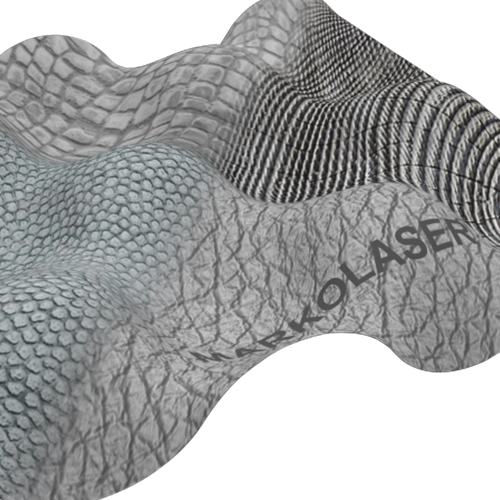
Ans: Die and mould makers usually choose between four ways to put text, logos, textures or cavities into tool steel. Here’s how they compare: Many tool rooms use CNC or EDM for the main cavity and laser for detail, text, textures and late design changes. Markolaser URSA suits work where precision on hardened or finished tools matters more than bulk material removal. Send us a sample part to see the result on your own component.
| Criteria | Laser Deep Engraving (URSA) | CNC Engraving / Milling | EDM (Sinker) | Chemical Etching |
|---|---|---|---|---|
| How it works | Pulsed laser removes material layer by layer | Rotating cutter removes material | Spark erosion through a shaped electrode | Acid dissolves unmasked metal |
| Finest detail | Very fine; small text, thin lines, micro-textures | Limited by smallest cutter; inside corners keep the tool radius | Fine, sharp inside corners; limited by electrode making | Fine in 2D; edges undercut as depth grows |
| Depth | Microns to several mm; deep volumes take longer | Any depth; fastest for large material removal | Deep cavities and ribs | Shallow only, even depth hard to hold |
| Hardened steel (after heat treatment) | Yes, no tool wear | Possible with hard milling; cutters wear fast | Yes | Yes, but slower and less even |
| Curved and 3D surfaces | Yes, with 3D-on-3D software and Z focus shift | Yes, with a 3–5 axis machine and CAM programming. | Yes. with shaped electrode | Poor; masking curved faces is difficult |
| Textures and patterns | Yes, repeatable from a digital file | Limited | Spark-erosion finishes only | Yes; traditional method; batch-to-batch variation |
| Tooling and consumables | None (electricity only) | Cutters | Electrodes (copper or graphite), dielectric fluid | Masks/film, chemicals |
| Design change | Edit the file and run | New CAM program, sometimes new cutters | New electrode to machine | New mask or film |
| Environment and safety | Fume extraction; Class 1 enclosure | Chips, coolant | Dielectric fluid handling | Acid handling and effluent treatment |