

Frequently Asked Questions
Ans: Markolaser machines offer non-contact processing with high-speed, ultimate accuracy, and strict tolerance management. This minimizes material distortion, eliminates burrs, and reduces overall maintenance and operational costs compared to traditional mechanical tools.
Ans: Industrial laser machines can easily be integrated directly into your existing automated production lines or operated as standalone workstations where materials are manually loaded and unloaded by operators.
Ans: Markolaser technology handles flat 2D, 2.5D, and 3D surfaces seamlessly for marking, engraving, cutting, drilling, and welding applications.
Ans: There is no single laser process that is best for all automotive components. The ideal process depends on the material, shape, and functional requirements of the part.
-
High Precision & Convenience
Lasers offer extreme accuracy and ease of operation. -
Seamless Integration
They can easily be integrated into existing automated production lines. -
Cost & Time Efficiency
Laser-based manufacturing results in shorter cycle times, lower maintenance, and reduced operating costs. -
Material Versatility
They can process a wide variety of materials, including metals, polymers, composites, and glass. -
Eco-Friendly Operations
Laser processing reduces environmental impact by eliminating consumables and minimizing waste. -
Compact Footprint
Laser machines feature compact designs that save floor space. - The adoption of lasers in manufacturing represents a paradigm-shifting advancement, making them one of the most efficient engineering tools available today.
Ans: There is no single laser process that is best for all automotive components. The ideal process depends on the material, geometry, and functional requirements of the part.
-
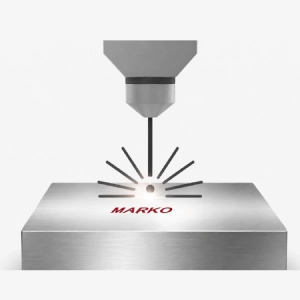
Laser Marking & Engraving
Recommended for permanent serial numbers, VINs, Data Matrix codes, and QR codes for traceability. Fiber lasers are commonly used for metals, while UV lasers are preferred for heat-sensitive plastics. -
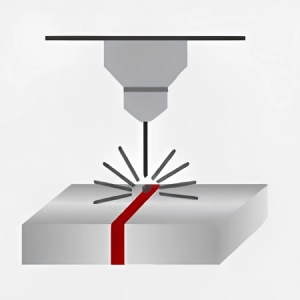
Laser Welding
Provides high-strength joints for EV battery packs, motors, sensors, fuel injectors, gears, body components, and transmission assemblies. -
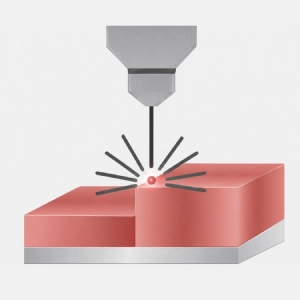
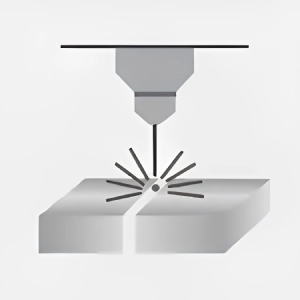
Laser Cutting
Used for chassis components, airbag parts, exhaust systems, and custom prototyping. It enables accurate cutting of sheet metal, tubes, and precision automotive parts with minimal burr formation. -
Laser Cleaning
Removes rust, paint, oil, oxides, and surface contaminants from molds, dies, fixtures, and metal components without damaging the base material. It is widely used for mold maintenance, surface preparation, and restoration. -
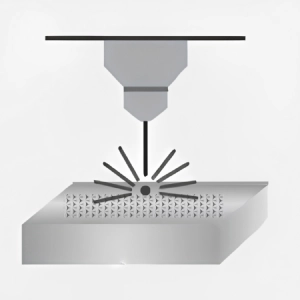
Laser Surface Texturing
Laser processing reduces environmental impact by eliminating consumables and minimizing waste. -
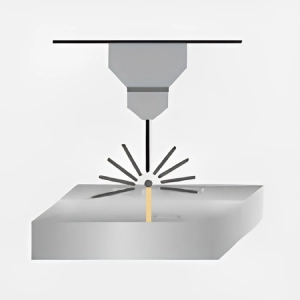
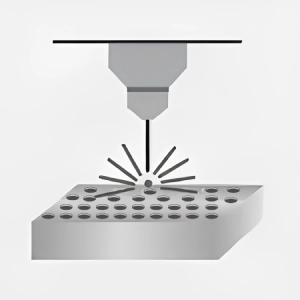
Laser Drilling
Produces extremely small, precise holes in fuel injectors, filters, turbine parts, and sensor housings used in high-performance automotive systems.