Laser Annealing

What is Laser annealing

Laser annealing is the slowest and gentlest process marking a carbon containing metal without engraving or cutting it. A focused beam heats the surface just enough to grow a thin oxide layer over it without altering its dimension and structural strength. Which is why it is the most preferred laser process where surface integrity matters the most.

Key Characteristics and Use Cases (Laser Annealing )

01 - Material impact

Zero material loss. It alters atomic structure, crystalline states, or creates controlled oxidation layer colors depending on the dwell time and power settings.

02 - Precision

Extremely high. Often used at the microscopic level.

03 - Data Centre / Tech Application

Semiconductor doping to repair silicon crystal structures after ion implantation, and permanent, flush barcoding/marking on metal server chassis.

04 - Other Industries

Medical devices (permanent, bacteria-resistant black marking on surgical steel) and automotive parts tracking.

Laser annealing process
01 PROCESS
LASER ANNEALING

what happens in laser annealing

An oxidation process, not an (engraving or etching one)

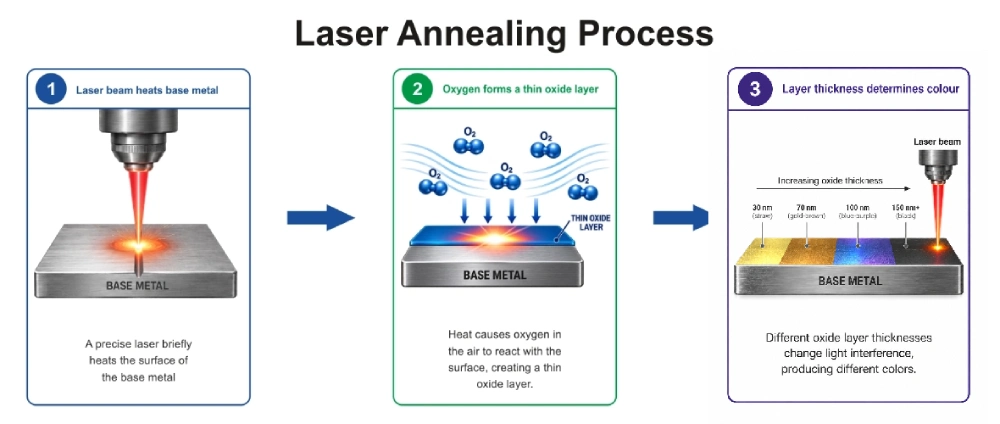
When a laser beam is held over a carbon-containing metal for a controlled time, the heat drives oxygen from the surrounding air into the top few hundred nanometres of the metal, growing a thin transparent oxide layer in place.

That skin sits on top of the original surface, so the part keeps its dimensions and structural strength — nothing is cut away. This is what makes annealing the marking method of choice wherever a mark has to survive without weakening the part underneath it, most notably on surgical instruments and implants.

A laser annealing marking beam heats the base metal — titanium, steel, stainless steel, or iron — and a thin oxide layer grows on top of it as it cools. The colour you see is determined entirely by how thick that oxide layer grows.

02 PROCESS
LASER ANNEALING

Why the colour changes

Thin-film interference (does the coloring. )

The colour comes from light bouncing off two surfaces at once — the top of the new oxide layer and the metal underneath it As the oxide layer grows thicker with more heat, the surface goes light golden to a flat grey-black as the layer gets thick enough to scatter light instead of filtering it.

Beam sets the exposure time Laser power, spot size, and scan speed decide how long each point on the surface stays hot enough to oxidise.

Oxide layer forms Oxygen from the air combines with the surface, building an oxide film only tens to a few hundred nanometres thick.

Light interferes Reflections from the top and bottom of that film cancel some wavelengths and reinforce others the film thickness picks the colour.

Colour reads as the mark The result is a smooth, wear-resistant, permanent mark with no groove and no material lost.

03 PROCESS
LASER ANNEALING

Annealing Compatible materials

Titanium and titanium alloys (like Ti-6Al-4V)

Runs through a wide, vivid colour range at relatively low heat input a common choice for surgical implants where a durable, non-toxic mark is needed. Titanium laser annealing is used for biomedical implants and devices, colour-coded surgical tools, FDA UDI traceability, Jet engine turbine blades, fasteners, landing gear brackets, and hydraulic housings, localized thermal processing of titanium workpieces and sheet metal forming, premium titanium smartphone frames, smartwatches, and luxury eyewear use laser annealing for brand logos, regulatory text, and accents.

Carbon steel (medical grade)

Anneals to warm gold and brown tones, deepening toward black when more heat is applied. The key application areas include transmission gears, crankshafts, ball bearings, Engine Internal Components, Drill bits, wrenches, saw blades, and stamping dies are branded via laser annealing, Injection molds and heavy-duty structural carbon steel bolts, Airtight Assemblies and consistent surface annealing on heavy factory components.

Stainless steel 304 & 306 (general fabrication)

Known for producing an especially clean, dark oxide with the correct power settings — a common for traceability marks that need to stay legible for the life of the part. Laser annealing on SS304 is used wherever high legibility, sterility, and corrosion resistance are mandatory. It is preferred to mark on surgical tools, Microscopic 2D barcodes and serialization codes for device identification, Pharma and chemical lab furniture, exhaust component markings and fluid management and bathroom luxury fittings .

Iron (Crisp Jet black mark)

Laser annealing on iron is preferred for contamination prevention of medical devices and surgical parts, UDI tracking of surgical instruments, rust and corrosion resistance of automotive components, VIN numbers, debris free labelling used in data centres, bus bar and frame identification, marking food safety on utensils and other aesthetic uses. variable output

04 PROCESS
LASER ANNEALING

How annealing differs from engraving and etching

Laser engraving and laser etching both remove material to create a visible mark whereas annealing removes nothing. Engraving cuts a groove; etching melts a shallow surface texture; annealing only grows a thin, colour-shifting oxide layer on top of the original surface. Which is why annealing is the only process that leaves the part's dimensions, weight, and structural strength completely unchanged and does not change its functionality.

05
APPLICATIONS
WHERE ANNEALING GETS USED

Where annealing
gets used

For applications that need marks without altering the component structure.

01

Medical devices & implants

UDI codes and lot numbers on instruments and implants, where the mark can't create a crevice for corrosion or bacteria to gather in.

01
02

Automotive components

Date codes and part traceability on housings and fittings that need a mark to survive the same service life as the part.

02
03

Tooling & die manufacturing

Identification marks on precision tooling where surface hardness and dimensional tolerance can't be disturbed.

03
04

Household & industrial metal goods

Branding and specification marks on utensils and appliance parts that need a smooth, food-safe finish.

04
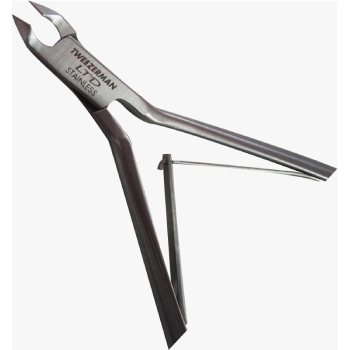
Dark, permanent text laser annealed onto the joint surface of a SS 316 Tweezerman cuticle nipper
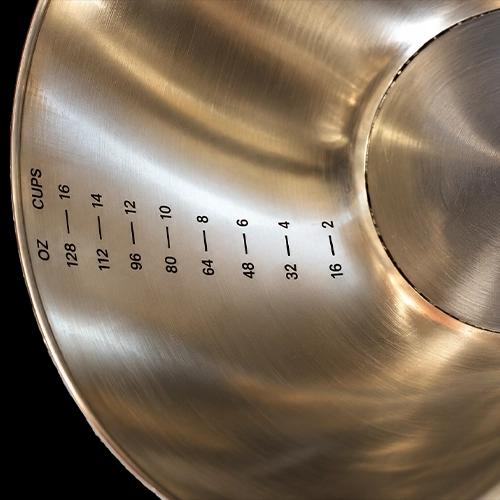
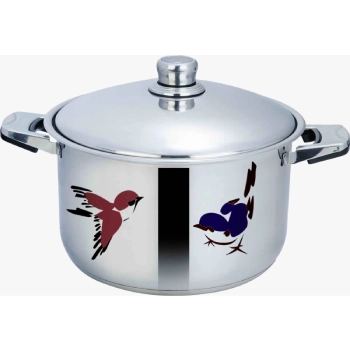
Stainless steel cooking pot showing vibrant colors created using a markolaser color laser annealing process
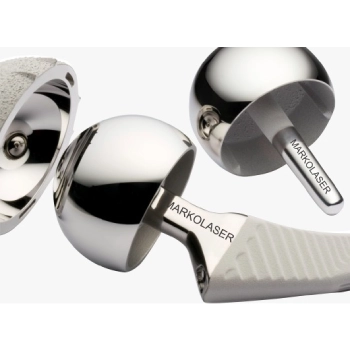
Laser Annealed Titanium Hip Implant Femoral Head With Laser Marked MARKOLASER Branding
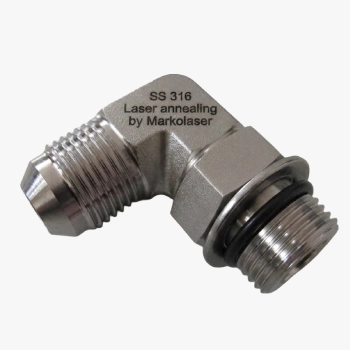
ss-316-stainless-steel-hydraulic-elbow-fitting-with-laser-annealed-marking-by-markolaser
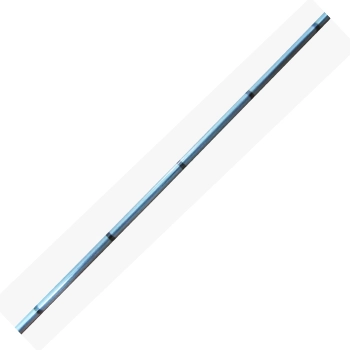
Laser Annealed Stainless Steel K Wire With Black Depth Marking Bands For Surgical Measurement, By MARKOLASER
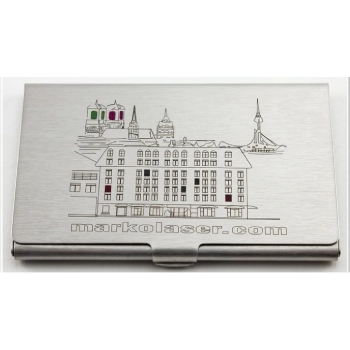
High Contrast Color Laser Annealing On Visiting Card Holder Of SS Markolaser
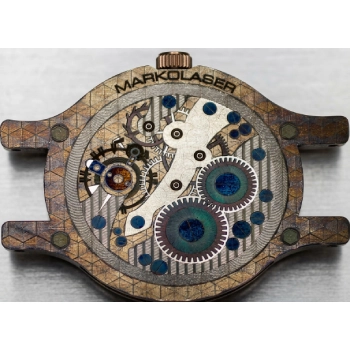
High Contrast Color Laser Annealed Watch Caseback And Movement With Geometric Engraving And Laser Marked Logo
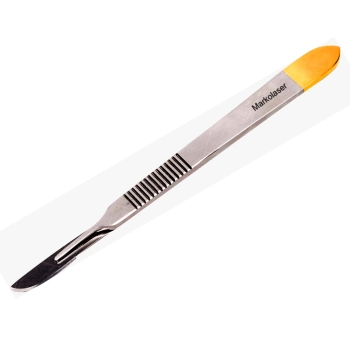
Medical Grade Stainless Steel Scalpel Handle Featuring High Contrast Laser Annealing For UDI Tracking.

Get a sample marked

Send a part, see the exact colour it anneals to.

Markolaser can run a sample on your material before you commit to a machine, so that you are sure of the finish.

Metal Annealing Compatibility Common Use Case
Stainless Steel 316 / 316L Excellent Surgical instruments, implants
Stainless Steel 304 Excellent Medical devices, food-grade components
Stainless Steel 410 / 420 / 440 Excellent Tooling, cutlery, high-carbon parts
Titanium & Titanium Alloys Ti-6Al-4V, CP Ti Excellent Implants, watches, jewellery
Cobalt-Chrome Alloys Good Orthopedic implants
Carbon Steel / Tool Steel Good Dies, moulds, tooling
Cast Iron Fair Industrial components Surface porosity can affect consistency
Nickel-Based Alloys e.g. Inconel Fair High-temperature automotive / aerospace parts
Aluminium (pure) Not suitable Use laser marking or ablation instead
Copper & Brass Not suitable Use laser marking instead
Pure Gold / Silver Not suitable Use laser engraving instead
06 PROCESS
LASER ANNEALING

Sourcing the Annealing machine

Fibre and UV laser systems built (for annealing work )

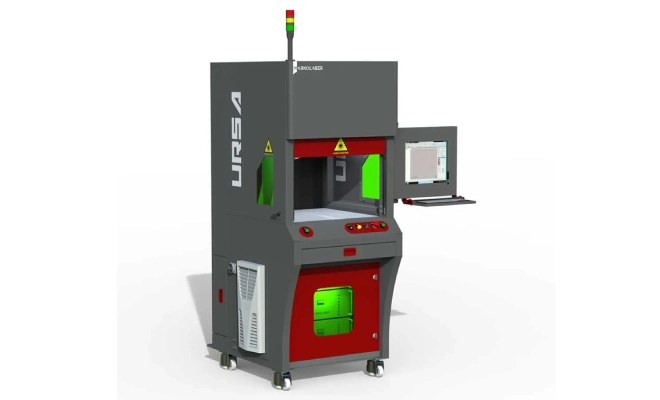
Markolaser designs and builds its marking machines including the LEO, Orion, Ursa, and Hercules ranges and UV lasers for the fine power control that annealing depends on.

Sample before you commit Send a part and get it annealed as a sample so the exact colour and finish can be checked before ordering a machine.

Pan-India service network Application and service support out of Gurugram, Haryana, Delhi NCR, Baddi, Telangana, Tamilnadu, Karnataka, Punjab, Gujarat, Coimbatore, Faridabad, Noida, Pune, Mumbai, Bengaluru and other manufacturing hubs of India.

Traceability built in Machines integrate with ERP/MES systems, so an annealed code can feed straight into a traceability record on the production line.

Frequently Asked Questions?

1 Does laser annealing weaken the part?

Ans: No. Because nothing is cut, melted away, or vaporised, the part keeps its original dimensions and structural strength. Only a very thin oxide layer forms on top of the existing surface.
What to see it on your part? Contact us

2 Can I control which colour I get?

Ans: Yes, within the range the base metal supports. Colour is set by laser power, scan speed, and number of passes — all of which change how much heat is delivered and therefore how thick the oxide layer grows.

3 Why is annealing slower than other marking methods?

Ans: Growing a clean, even oxide layer takes more controlled dwell time than simply melting or vaporising the surface, which is why annealing runs slower than carbon migration or standard engraving.

4 Which metals can't be annealed this way?

Ans: Metals with little to no carbon or reactive alloying content — most non-ferrous metals like plain aluminium or copper — won't oxidise into a visible colour the same way, and are usually marked by other laser processes instead.

5 Is annealing marking permanent?

Ans: Yes. The oxide layer is part of the surface itself rather than a coating, so it doesn't wear, flake, or wash off under normal handling.

6 How much does laser annealing cost?

Ans: Cost depends on part volume, material, and mark complexity rather than a flat rate. Service & job-work marking is priced per part or per batch whereas running it in-house depends on the machine (fibre vs. UV, power, automation, integration ) and your laser annealing part volume. Send a sample part for a quote based on your actual specs.

7 How long does laser annealing take per part?

Ans: The time of Markolaser laser annealing depends on marking size, color, depth, and the material to be marked. Time can range from less than a second to few seconds each mark. Laser Annealing is slower than laser engraving. High-volume annealing typically integrate annealing into the production cycle.

8 Should we outsource laser annealing or buy a machine in-house?

Ans: Job work or outsourcing makes sense if the production volume is very low and you are still checking the finish and the color achieved on your material. But Buying a Markolaser annealing machine pays off if the volume is steady and predictable and the process is proven on their parts. Also having an annealing machine in house makes more sense if it needs to be integrated with ERP/MES/ Traceability requirements.

9 Does laser annealing meet medical and regulatory compliance requirements?

Ans: Yes laser annealing is the standard marking method for FDA UDI (Unique Device Identification) traceability on surgical instruments and implants, since it creates a permanent, crack-free marks without disturbing the surface finish. It is also compatible with ISO 13485 medical device manufacturing environments. Compliance specifics (readability standards, biocompatibility testing) depend on your device classification.

10 Does Markolaser machines hold any certificates ?

Ans: Yes Markolaser laser machines are CE compliant. Certifications can be done on request. Ask us for the models

Read more on our guide to Laser marking Vs Laser Annealing

See Laser Annealing on Your Own Part

Send us a sample component and we will laser anneal it for you so you can check the exact colour, mark quality, and finish before deciding on a machine or service.

Request Sampling

Last updated : Sept, 2026