



-
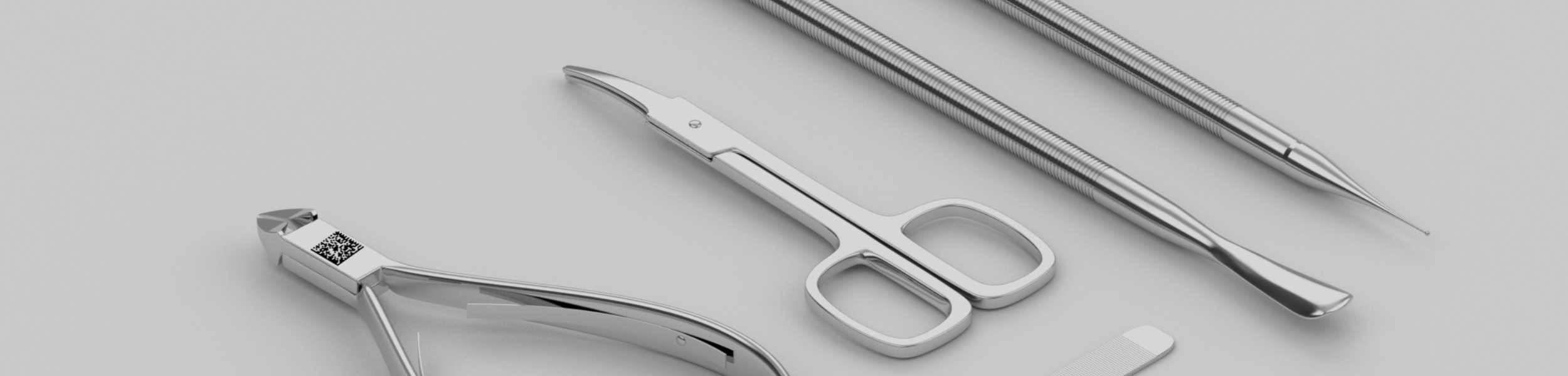
Surgical Scissor
Laser Marking of UDI Codes on Stainless Steel Instruments
Annealing of the stainless steel done in accordance to GS1 standards with DMC and HRC. The surface of the steel is charred only to a certain depth in few microns to comply with the medical safety standard marking. These marks though permanent are also corrosion resistive. Apart from fulfilling UDI traceability requirement; direct part marking can also be helpful in Healthcare organizations to manage their inventory and can be linked with patient ID as code in internal servers whereby the information could serve to connect patient surgery history with all the instruments used on them. DMC code is marked in respect to the guidelines defined by ISO-16022, which is an international standard for "Data Matrix Bar-code Symbology Specification"
Features:- Medical Device: Surgical Scissor
- Material: SS316 and SS 410
- Laser Machining Type: Annealing UDI
- Marked By: 20W DE- HF Fiber Laser
- Marking: Logo and 2D Data Matrix
- DMC Size: 2.71 mmx 2.71 mm Avg.
- Marking Time: Marking Time: 5 sec.
-
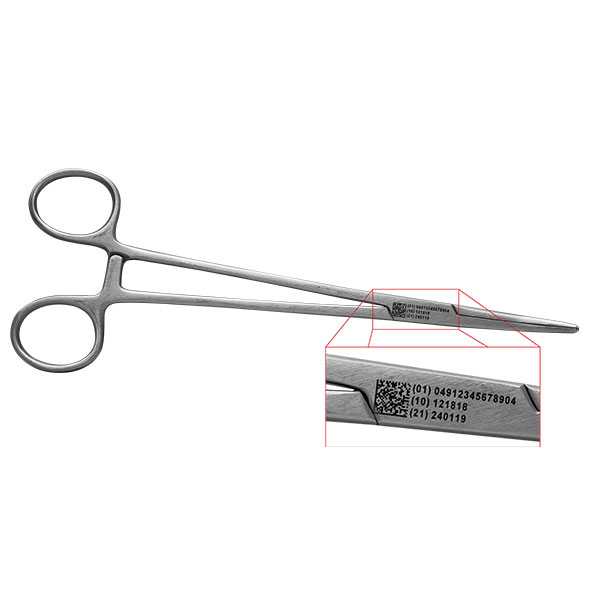
Surgical Clips
Direct Code Marking on Titanium Instruments
Grade 1 titanium is one of the most used titanium grades in health care industries for manufacturing surgical instruments. Due to its superior form ability and corrosion resistive properties they are used to produce most complicated tiny surgical implants and instruments. The vessel clips are marked with UDI compliant codes and manufacturer logos in accordance to DPM guidelines defined in the standard ISO/IEC 24720. The main advantage of direct part marking is to avoid any chances of felling off the printed labels inside patients body while operating. These marks could easily withstand bodily plasma and high temperature.
Features:- Medical Device: Surgical Clips
- Material: Grade 1 Titanium
- Laser Machining Type: Ablation UDI Mark
- Marked By:20W DE- HF Fiber Laser
- Marking:2D Data Matrix
- DMC Size: 2.71 mm x 2.71 mm Avg
- Marking Time: 5 sec.
-
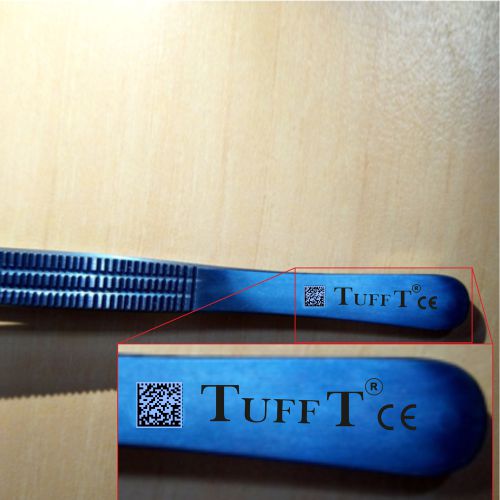
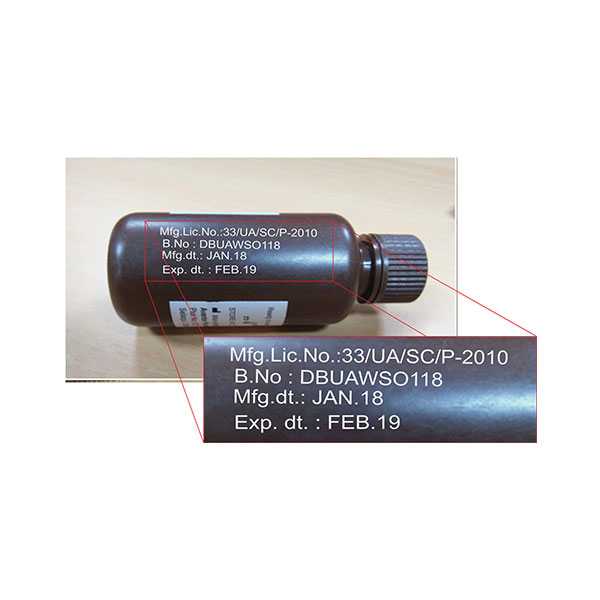
LDPE in-vitro diagnostics Packaging , Nylon In-vitro diagnostics and HDPE Bottles
Medicinal packaging comes with Licence No., Production info. Of company such as Lot No., Manuf. Date & Expiration Dates. These Data while manufacturing should be intact and must remain unaltered to avoid catfishing, removable data could prove to be fatal for the consumers. Hence, while packaging these Data should be placed on the packet itself with Laser marking either they belong to LDPE make or HDPE. We at Markolaser provide best of the solutions to pharmaceutical industries to place the information without use of detachable Labels.
HDPE in-vitro diagnostics are also clearly marked with scale to analyse the Blood samples.
Features:- Medical Device: LDPE in-vitro diagnostics Packaging , Nylon In-vitro diagnostics and HDPE Bottles
- Material: Font marking
- Laser Machining Type: Annealing UDI
- Marked By: 20 W Normal Fiber Laser
- Marking: Logo and 2D Data Matrix
- DMC Size: 2.71 mm x 2.71 mm Avg.
- Marking Time: 2s approx.
-
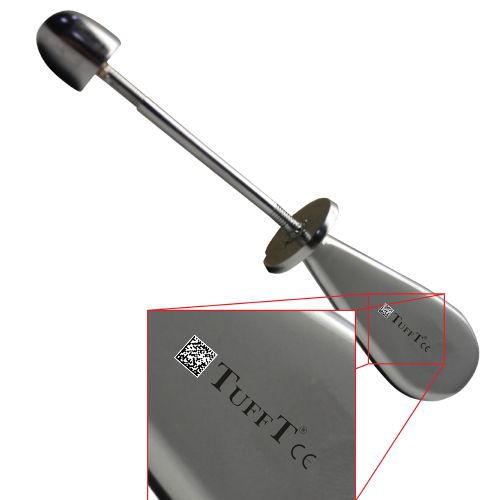
Retractor
Laser Marking on Metallic Hip Joints
Artificial Hip joints are engineered in a way that it could bear with fatigue and load three times the body weight, to ensure impact resistance they are designed using Chromium-Vanadium material, due to their biocompatible properties these joints can be used for many years without replacing, Therefore, permanent-legitimate UDI marks are required for safe traceability for the period from production to implantation. Fiber lasers provides with the best marking results.
Features:- Medical Device: Retractor
- Material: SS
- Laser Machining Type: Contrast laser marking
- Marked By: 20 W DE-HF Fiber Laser
- Marking: Logo and 2D Data Matrix
-
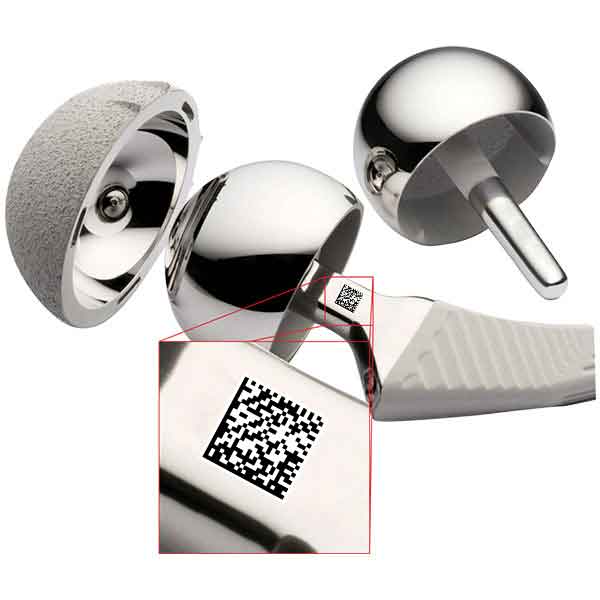
Laser marking on medical equipment Hip Balls
Micro-Data Matrix Code are real challenge to mark as well as read perfectly, due to space restrictions in Conical & Cylindrical bone screws made of titanium alloys which have maximum diameter of 1-2 mm; it is difficult to find flat spaces to mark. With our fine beam Lasers, it is still possible to mark readable codes of size 0.4mm and indeed contrasting for total traceability of smaller implants.
Features:- Medical Device: laser marking on medical equipment Hip Balls
- Material: Chromium Vanadium
- Laser Machining Type: Black Marking
- Marked By: Fiber Laser
- Marking: Logo and 2D Data Matrix
-
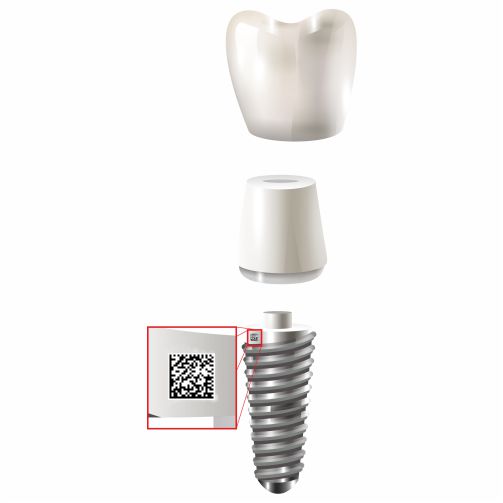
Conical or cylindrical Dental Jaw screw
Features:- Medical Device: Conical or cylindrical Dental Jaw screw
- Material: Titanium Alloy
- Laser Machining Type:Small DMC 0.6x0.6 mm, Annealing
- Marked By: 20W DE HF
-
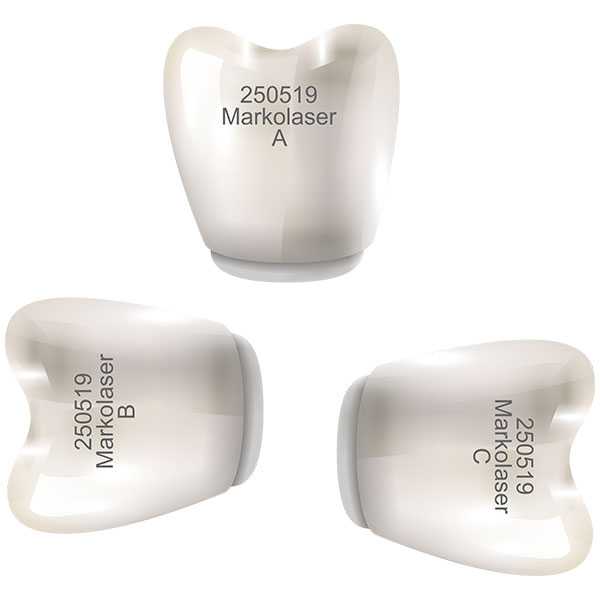
Tooth crowning
Features:- Medical Device: Tooth crowning
- Material: Ceramic
- Laser Machining Type:Traceability Fonts (Serial No.), Black
- Marked By: Fiber Laser
All the implants are marked by Laser as these marks are biocompatible to bodily fluids and remains intact for several year, hence undetachable marks remains on the surface and is resistant toward the germs. Easy track and trace can be achieved. Laser markings are permanent and are abrasion, heat and acid resistant.
-
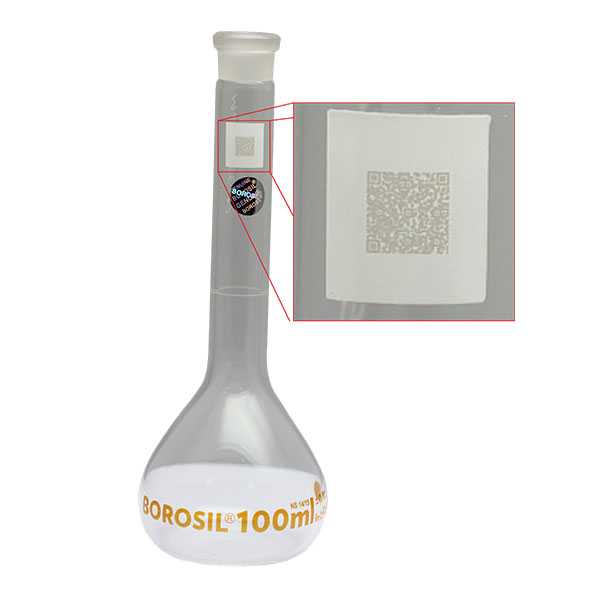
Pipette, Burete, Flasks, Cylindrical Measurement
Features:- Medical Device: Pipette, Burete, Flasks, Cylindrical Measurement
- Material: Glass Borosilicate
- Laser Machining Type: Emulsion removal DMC
- Marked By: 20W Normal
Important sectors we cover:
- 1. Part traceability and UDI.
- 2. Annealing
- 3. Micro machining
- 4. Precision machining
Medical Industry is one of the most high-risk product manufacturers. From ranging to wheel chair to the stent, all the products are directly related to health of the patient. Hence, error while manufacturing of these products or a minor defect could prove to be very costly to the life. Counterfeiting! Is the problem worst hit by genuine medical OEMs, this problem not only causes a lot of money to the manufacturer; but too have risked lives of millions. To deal with this dilemma one of the key solutions is traceability of the medical equipment.
UDI Marking
Unique device identification (UDI) is a series of numeric as well as alphanumeric characters created through internationally accepted device identification and coding standards and thus allowing unambiguous identification of specific devices available in market
Read More ...